

get in touch
-32232.png)
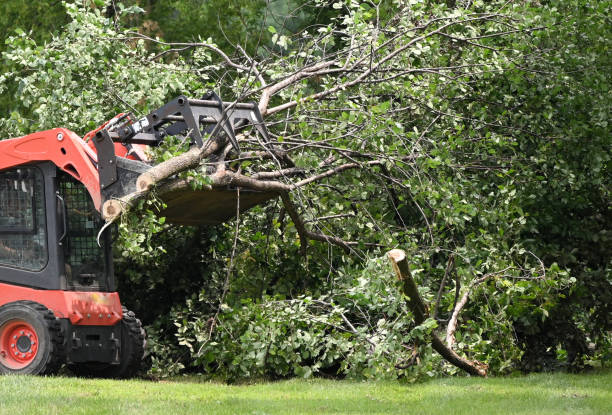
It happens fast. A spring storm rolls through the Dallas-Fort Worth area, and by the time the wind dies down, a tree is on your roof, blocking your driveway, or leaning dangerously against your fence. Or you wake up one morning and notice that a tree in your backyard has split overnight — no storm, no warning — just a structural failure that left a massive limb resting against your house.
Emergency tree situations are stressful. They are unexpected, they are disruptive, and they can be genuinely dangerous if not handled correctly and quickly. At Salas Services, we provide emergency tree removal services for homeowners throughout the Dallas-Fort Worth Metroplex. Here is exactly what to do — and what not to do — when you are facing a tree emergency in DFW.
North Texas weather is some of the most tree-hostile in the country. The combination of threats that DFW homeowners deal with year after year creates an elevated risk of tree emergencies compared to most other parts of the United States.
Severe Spring Thunderstorms
The DFW Metroplex sits in one of the most active severe weather corridors in North America. Spring storms bring straight-line winds, microbursts, large hail, and tornadoes — all of which can take down healthy, well-established trees in seconds. Spring is the busiest season for emergency tree removal in Dallas-Fort Worth by a significant margin.
Summer Drought Stress
Extended summer droughts weaken trees from the inside out. Trees that survive a drought summer often emerge with compromised root systems and internal decay that makes them structurally unpredictable. These drought-stressed trees are the ones that fall during storms, split in high winds, or simply fail without warning in the weeks and months that follow a dry summer.
Ice Storms
DFW ice storms are deceptively destructive. Ice accumulates on branches and can add hundreds of pounds of weight to a single large limb. Even healthy trees can lose major branches under ice loading — and trees that were already weakened from drought or disease often fail completely.
Oak Wilt and Other Diseases
Trees killed or severely weakened by oak wilt, hypoxylon canker, or other common DFW tree diseases become structurally unpredictable over time. A tree that appears to be standing fine can have internal decay so advanced that it is essentially waiting for the next strong wind to come down.
The moments right after a tree falls or a major limb comes down are critical. Here is the right sequence of actions for DFW homeowners:
Step 1 — Ensure Everyone Is Safe First
Before you do anything else, make sure everyone in your household is accounted for and away from the area of the fallen tree. If the tree has fallen on or into your home, evacuate the structure and do not re-enter until a professional has assessed structural safety.
Step 2 — Check for Downed Power Lines
If a tree has fallen near or across power lines, treat every line as live and energized — even if the power is out in your neighborhood. Stay at least 30 feet away from any downed line and call your electric utility provider immediately. Do not attempt any tree removal near downed power lines yourself.
Step 3 — Document the Damage
Before any cleanup begins, take photos and video of the damage from multiple angles. This documentation is essential for homeowners insurance claims and should be done as thoroughly as possible before anything is moved or cut.
Step 4 — Contact Your Homeowners Insurance
Most homeowners insurance policies cover damage caused by fallen trees — but coverage details vary. Contact your insurance company as soon as possible to report the damage, understand your coverage, and ask whether they have a preferred vendor list for emergency tree removal. Keep all receipts and documentation from any work performed.
Step 5 — Call a Professional Emergency Tree Removal Service
Do not attempt to remove a large fallen tree yourself. Emergency tree removal is dangerous work — especially when the tree is resting against a structure, near power lines, or under significant tension. Improper cuts on a tree under tension can cause dangerous kickback, snapping, or rolling that can seriously injure anyone nearby. Call a professional emergency tree removal company in DFW and let trained crews with the right equipment handle it safely.
Understanding what to avoid is just as important as knowing the right steps:
Do not attempt to move or cut a tree resting on your roof. A tree resting against or on top of a structure may be providing support to damaged sections of the building. Moving it incorrectly can cause further structural collapse. Always have a professional assess this situation before any cutting begins.
Do not use a chainsaw if you are not trained. Chainsaws used improperly on storm-damaged trees cause serious injuries every year. Trees under tension behave unpredictably when cut — without the training and experience to read these forces, even simple-looking cuts can go dangerously wrong.
Do not hire an unlicensed crew just because they show up quickly. After major DFW storms, unlicensed and uninsured contractors appear in neighborhoods offering fast, cheap tree removal. If an unlicensed worker is injured on your property, you can face significant personal liability. Always verify insurance coverage and ask for proof before any crew starts work.
Do not ignore the rest of the tree if only one section came down. When part of a tree fails, the remaining structure may also be compromised. A professional assessment of the rest of the tree is essential after any emergency event to determine whether additional removal or trimming is needed.
When Salas Services responds to an emergency tree removal call in the Dallas-Fort Worth area, here is what the process looks like:
Rapid Assessment
Our crew evaluates the full situation — the position of the tree, what it is resting on or against, any power line involvement, and the safest approach for removal. Safety planning happens before any cutting begins.
Controlled Sectional Removal
Large trees — especially those resting on structures or near power lines — are removed in sections from the top down using ropes, rigging, and controlled lowering techniques. This precision approach prevents further damage to structures and property during the removal process.
Complete Cleanup
When the tree is down and removed, we clear all debris, branches, and wood from your property. You will not be left with a pile of storm debris in your yard.
Assessment of Remaining Trees
After handling the emergency, we will assess other trees on your property that may have been stressed, damaged, or weakened by the same storm event. Addressing these proactively prevents the next emergency before it happens.
This is one of the most common questions after a tree emergency, and the answer depends on the specifics of your policy and situation.
In general, most standard homeowners insurance policies cover the cost of removing a tree that has fallen on a covered structure — your home, your fence, your garage. Damage caused by the fallen tree to those structures is typically covered as well.
However, insurance generally does not cover the removal of a tree that has simply fallen in your yard without damaging a structure, or the removal of a hazardous tree that has not yet fallen. Coverage limits, deductibles, and exclusions vary significantly by policy — always contact your insurance provider directly to understand what your specific coverage includes.
When you call Salas Services for emergency tree removal in the Dallas-Fort Worth area, you get a team with over 30 years of experience handling North Texas tree emergencies of every kind. We bring the right equipment, the right training, and the right approach to every situation — working safely, efficiently, and with complete cleanup included.
We are a family-owned business that has served DFW homeowners for three decades, and we treat every property we work on with the same care and respect we would want for our own homes. Whether it is a single fallen limb or a large tree through a roof, Salas Services is ready to help.
We serve homeowners throughout Irving, Arlington, Grand Prairie, Grapevine, Coppell, and the surrounding Dallas-Fort Worth Metroplex.

Here are the most common questions client’s usually have for us. Still have more questions? Contact Us.
Yes, we offer emergency tree removal services for situations such as storm damage, fallen trees, or hazardous trees posing an immediate risk. Contact us at [phone number] as soon as possible in case of emergencies, and our team will prioritize your situation.
We can assist you with the process of obtaining permits for tree removal, if required. The need for permits varies based on local regulations and tree preservation ordinances. Our team will guide you through the necessary steps and provide any documentation or information needed for the permit application.
While trees are generally low-maintenance, certain signs indicate the need for professional intervention. Watch out for symptoms such as extensive dead or dying branches, sudden leaf loss, significant pest infestation, leaning or unstable tree structure, or visible signs of disease or decay. If you notice any of these issues, it's best to consult with our skilled arborists.
Several signs indicate that a tree may need to be removed, including significant structural damage, extensive disease or pest infestation, severe leaning, extensive root damage, or proximity to power lines or structures. Our professional arborists can assess the tree's health and safety to determine if removal is necessary.
The frequency of tree trimming or pruning depends on various factors such as tree species, age, and overall health. As a general guideline, it is recommended to have trees pruned every 3-5 years to maintain their shape, promote healthy growth, and remove any hazardous or dead branches.
The ideal time to plant new trees depends on the tree species and climate. In general, spring and fall are the preferred seasons for tree planting as the weather conditions are more favorable for root establishment. However, it's best to consult with our experts who can provide guidance based on your specific location and tree species.

Can’t find the answer you’re looking for? Please chat with our friendly team.


Transform your landscape with our expert tree and lighting services. Our skilled team creates captivating outdoor spaces that radiate beauty and invite enjoyment.
